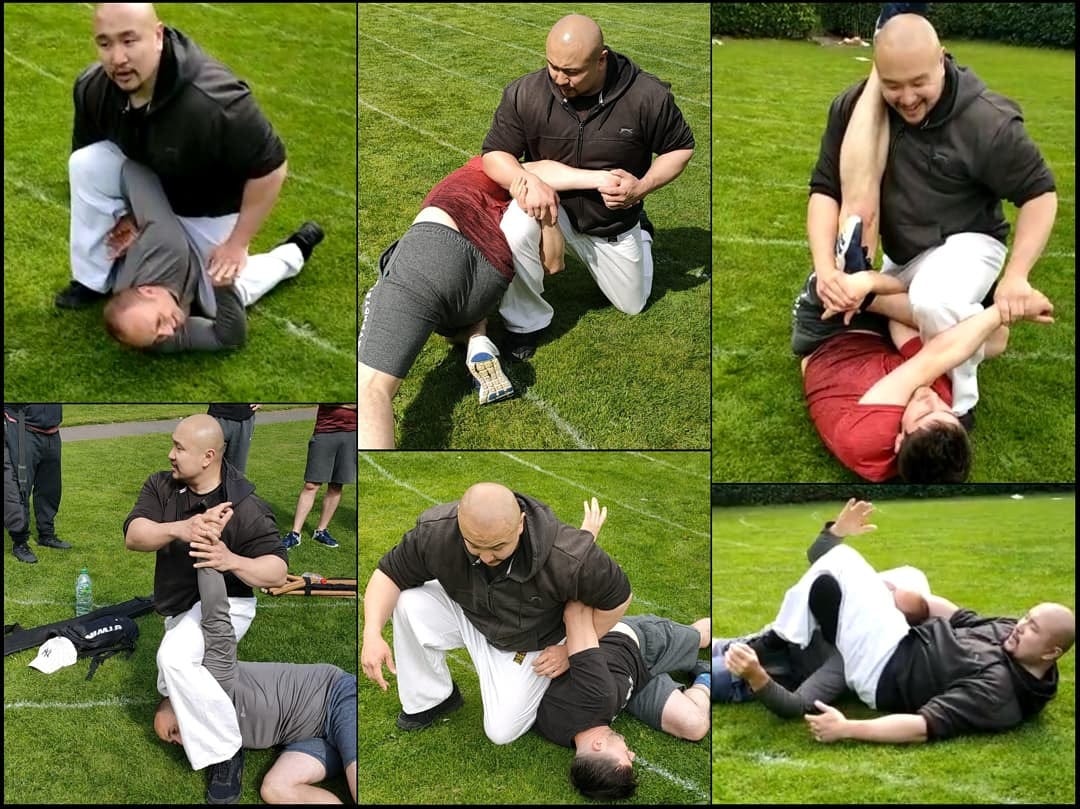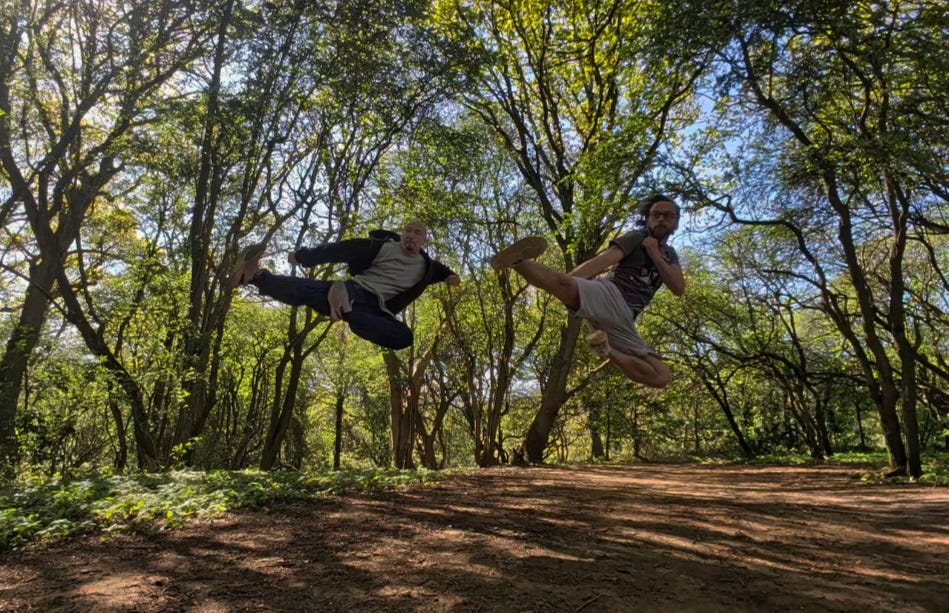
In Part 1, I wrote about my background and philosophy. It’s still such a huge part of my life, 10 years on, I thought it would be nice to revisit those ideas and reflect on how my life has changed, whilst my approach to martial arts has for the most part, remained the same.
I’ve always chosen to train at times that aren’t particularly sociable or convenient; I think it’s important to train when you don’t want to so that you can fight when you have to, when all else fails. Of course, I’m not looking to get into fights, but I see martial arts training as a preventative measure; maintaining the skills and awareness that might one day help you avoid or deal with a confrontation.
I’ve also always kept my training diverse. Having trained for 33 years, I’ve made a conscious effort to develop a broad skill set rather than specialise in just one area. My instructor always told me that to master one thing, you must master all things. To me, that means keeping every tool in my toolbox sharp.
Training in different styles also allows me to work around the limitations of any one discipline, whilst adapting my training to how I feel physically and mentally. I therefore consider motivation largely irrelevant; discipline is what counts. By practicing complementary styles, I can continue to train regardless of my frame of mind or physical condition. For instance, if I’m tired or sore, I can still do something softer without sacrificing the quality of my training. The goal is consistency, not simply pushing through for the sake of it as that could result in injury.
Martial Arts splits into three main categories; fighting, health and performance. I still train to keep my fighting skills sharp, as mentioned earlier, but I also train to stay healthy and strong. However these days, performance has taken on a new meaning as I make my living as an actor.
Having trained in many different styles has proved particularly useful in my career as every role is different and each character has their own way of moving. My martial arts background gives me a broader physical vocabulary to draw from, allowing me to adapt my movement to the needs of a character rather than approaching every role in the same way.
At one point in my life, I would meditate for 3 hours every day. Not necessarily all at once, but it was an important way for me to connect with nature and cultivate a sense of calm equanimity. I was also working through some personal challenges at the time. The amount of time we employ a coping mechanism can sometimes say something about what we’re dealing with.
I still meditate, but my relationship with it has changed. My natural state of being is now much closer to the state I used to work towards through meditation, so I don’t need to spend nearly as long getting there. In fact, it doesn’t take long at all.
So where does that leave me and my training today?
In many ways, I’m still doing the same things. Life has changed, but my lifestyle hasn’t. I no longer work in security (thankfully!). Whilst I still teach, it’s considerably less frequently than I used to. These days, that means the occasional seminar, plenty of screen fighting and some private sessions.
My values haven’t changed, but I’d like to think my approach has become more concise; with experience comes a better understanding of what matters, what works and how to communicate those ideas more effectively. That’s one of the reasons I decided to rewrite my 2020 book and release a second edition; to reflect my development as a practitioner and express the same core concepts with greater clarity, efficiency and the perspective that comes with experience.