

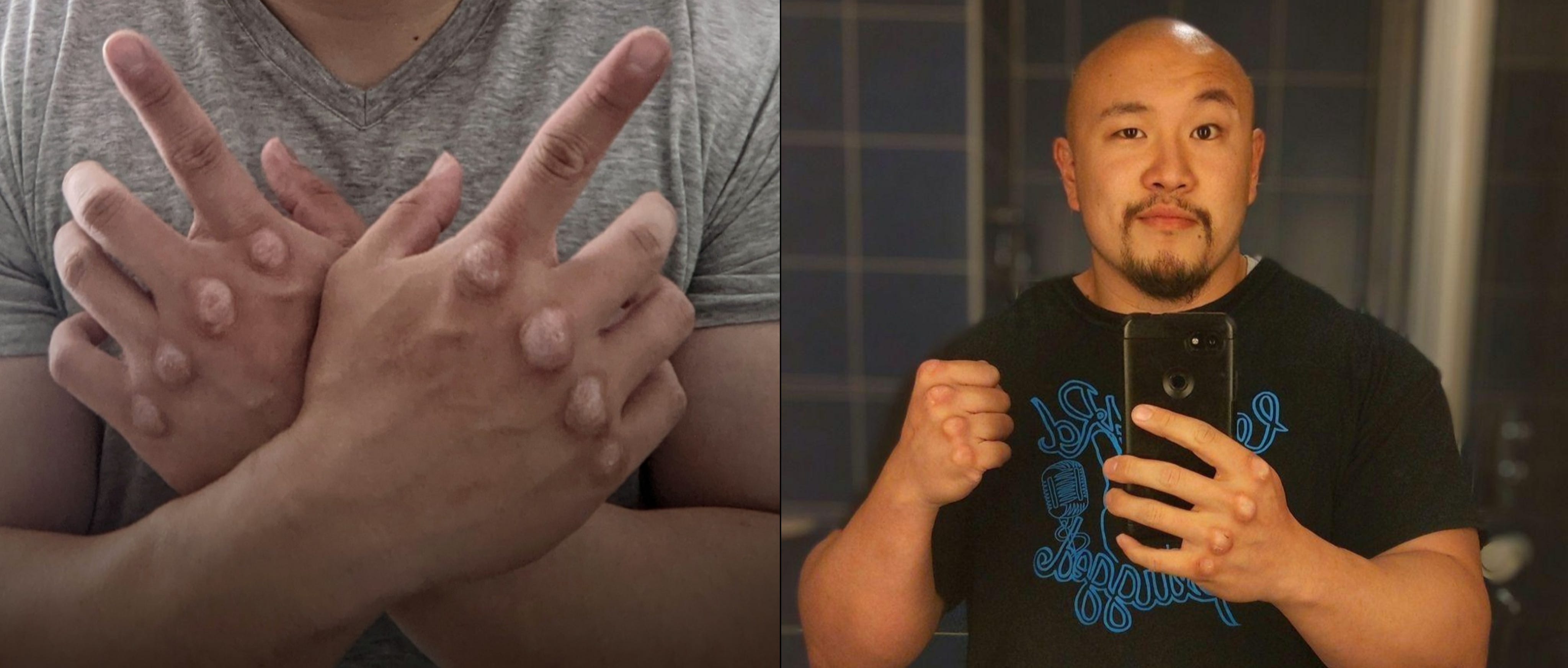
The number of messages I receive asking how to develop similarly callused knuckles is rather substantial, so this article is really a response to a frequently asked question. My knuckles are heavily callused and to some people, they signify hard training and conditioning. To others, they’re a status symbol, much like cauliflower ear and to some, a source of envy. I promise you though, there’s really nothing to be envious of! Let’s be honest, they don’t exactly look pretty, either; definitely not winning any beauty contests! If anything, they’re a reminder that years of training don’t necessarily do your hands any favours aesthetically.
My knuckles are the result of 33 years of martial arts training and over that time, I’ve developed a fairly well rounded skill set and I never focused solely on the hands. That’s an important distinction, because I want to emphasise that the calluses are a by-product of the training, not the end goal. Training specifically to develop them is short-sighted; it’s like wanting cauliflower ear without the jiu-jitsu to back it up, or fingertip calluses without becoming a better guitarist. You’d be pursuing a physical consequence of an activity rather than developing the skill itself.
Calluses develop when the skin thickens in response to repeated friction and pressure. For instance, if you lift weights regularly, you’ll probably develop calluses on your palms over time so you can handle heavier loads. Your knuckles can respond similarly to repeated contact, although the skin, underlying tissues and structures involved are different, but I won’t go into that.
The appearance of conditioned knuckles also varies between martial arts. Some Karate practitioners develop prominent calluses over the first two knuckles, while some practitioners of Chinese martial arts may develop them across all four. The pattern largely depends on the techniques practiced and the type of contact involved.
…But is it important? Not particularly. Can it cause problems later in life? It can, especially if conditioning is approached improperly or excessive force is used. …And if your primary motivation is to develop calluses simply to look tough, you’re probably training for the wrong reasons in the first place and more likely to injure yourself.
I’m often asked whether I have any problems with my hands. Honestly, I don’t. I still play the piano regularly and do plenty of handwriting without any issues. I’m also asked whether my knuckles allow me to hit harder, to which my answer is yes, I hit slightly harder for slightly longer because they allow me to tolerate repeated contact. It must be said though, if you trained for the calluses, you may develop endurance, but that’s not the same as generating more power; callused skin doesn’t automatically make your bones, joints or connective tissues stronger, which is why it’s so important to train the technique. Punching power comes from proper alignment, efficient biomechanics and the effective transfer of force through the body; callused knuckles alone contribute nothing to the power of a punch.
Another question I’m asked is whether or not they serve any practical purpose in my day-to-day life. Absolutely not. Am I planning on hitting anyone again? No (unless all else fails of course, but it’s important to have a few more tools in your arsenal than just punching!)
That said, there is definite value in sensible and progressive conditioning within an appropriate martial arts context. Learning to use your hands correctly, developing sound technique and gradually adapting to the demands of your discipline are all worthwhile. However, there’s an important distinction between preparing your body for training and deliberately subjecting your hands to excessive impact in pursuit of a particular appearance. More punishment doesn’t automatically mean better conditioning and visible calluses aren’t a reliable measure of progress.
I’m certainly aware that this particular look can contribute to the appearance of being a tough fighter and I get it, but as a deterrent, I really wouldn’t put much faith in it. From personal experience and I’m fairly certain I can state this unanimously that someone who wants to start a fight with you is unlikely to inspect your knuckles before making a decision. In a nightclub for instance, people can be impulsive, intoxicated or so caught up in their own emotions, that they may not even notice your hands. Even something more visible such as cauliflower ear, isn’t a reliable deterrent. Looking intimidating is no substitute for avoiding a confrontation in the first place.
So, if you’re serious about martial arts, focus on what actually matters; technique, cardiovascular fitness, sound judgement, situational awareness and composure under pressure. Train to become a better martial artist, not to look like one.
If callused knuckles develop along the way, so be it. They’re a reminder of the training you’ve done, not a qualification in themselves.
…And lastly, if you can become a highly capable martial artist without ever developing them, you’ve lost absolutely nothing; don’t chase the cosmetic evidence of training at the expense of the training itself!
Rant over!